Rope drop is the best way to set yourself up to feel like you had a successful Disneyland day because you can accomplish so much in the first hour or two.
The first hour or two after the parks open can be some of the most productive time of your entire day. Waits are generally lower, walkways are easier to navigate, and you can often knock out several attractions before the parks hit their busiest stretch.
But rope drop does not mean you need to show up an hour before opening, sprint to the biggest ride, or follow the exact same plan as everyone else.
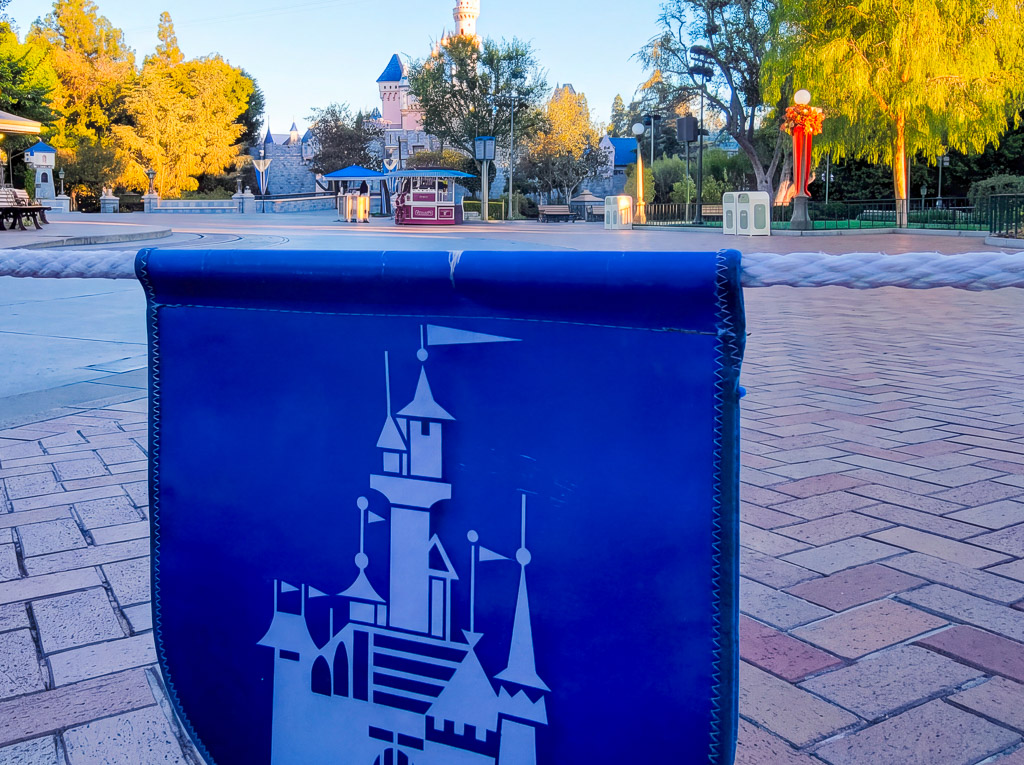
The best rope drop strategy depends on your priorities, who you are traveling with, and which attractions you want to experience that day. A family with young kids may have a completely different rope drop strategy than adults trying to focus on thrill rides.
And some of the most popular attractions are not necessarily the smartest rope drop choices.
In this guide, I’ll walk you through how rope drop works at Disneyland in 2027, how early I actually recommend arriving, how to choose the first ride that is best for your group, and the biggest mistakes I see people make when planning their morning.
If you’re still deciding on dates, tickets, hotel, and how many days to visit, start with my Disneyland planning guide first.
What Is Rope Drop
Rope drop is the unofficial term for being inside the park and ready to go when the attractions officially open for the day. Disneyland typically allows guests through the turnstiles before official park opening, then holds everyone at designated points inside the park until opening time.
That means you can get through security, scan into the park, grab coffee if needed, and get yourself in position before the attractions start running.
The goal is not to be first in line for one specific ride. The goal is to take advantage of the lower wait times during the first hour or two of the day.
How Early Should You Arrive for Rope Drop?
Disneyland typically starts letting guests through the turnstiles approximately 30 minutes before the posted park opening time. That gives you time to get inside, make your way toward the area where you want to start, and be ready when attractions officially open.
Check the Disneyland Resort park hours for the current opening times.
I do not think you need to arrive an hour before park opening to have a successful rope drop morning. For most families, that just means adding more standing and waiting before a long park day even begins.
My goal is to arrive early enough that I can get through security, scan into the park, and be in position before opening without spending a huge chunk of the morning waiting around.

Staying on Harbor Boulevard between Castle Inn & Suites and Howard Johnson Anaheim? Becca typically finds that leaving the hotel about 30 minutes before park opening gives you just the right amount of time to walk to Disneyland, get through security, and enter the park before the official rope drop.
And if you are running a few minutes late, don’t panic. Things happen. Not being physically at the rope when it drops does not mean your morning is ruined. You can still take advantage of the lower wait times during that first hour or two.
I also recommend handling breakfast before you get into position for rope drop. Most breakfast locations inside the parks are not open that early, although Market House on Main Street is an option if you want Starbucks. I usually suggest eating at your hotel, grabbing coffee before you arrive, or bringing a few snacks if anyone in your group needs something early. Then you can stop for breakfast after you have tackled your first few priorities for the day.
Use the time you are waiting for rope drop to mobile order breakfast for later. If I am rope dropping Fantasyland, I especially like ordering breakfast from Red Rose Taverne so it is ready after we knock out our first few rides.
How to Choose What To Rope Drop
The best rope drop strategy usually starts with an area of the park, not just one ride.
I look at our priorities for the day and figure out which part of the park gives us the best chance to get several of them done efficiently. If someone has an Adventureland priority, for example, I may build our morning around Adventureland, New Orleans Square, and Frontierland. That does not necessarily mean their priority ride is the very first attraction we do. It means I know it fits naturally into a morning where we can accomplish a lot without zig-zagging across the park.
That is the balance you are looking for: your priorities plus an area where you can get a lot done.
If nobody in your group cares about Fantasyland, there is no reason to rope drop Fantasyland just because someone else says it is the “best” strategy. Your morning should be built around the things your group actually wants to experience.
There are a few times when I may prioritize one specific attraction instead. If a ride is brand new, reopening after a refurbishment, has a new overlay, or is one of your biggest priorities and you do not have Lightning Lane access for it, getting there first can make sense. For example, if you are visiting Disney California Adventure without Lightning Lane and Guardians of the Galaxy is high on your list, that may be the attraction you specifically choose to rope drop.
I also like to start in an area that gives me backup options nearby. Attractions can have delayed openings or temporary downtime. If your first choice is not running, you want several other worthwhile attractions close enough that you can pivot without wasting the best part of your morning walking across the park.
That last point is one of the reasons I do not always recommend some of the most popular rope drop choices.
Rides I Usually Wouldn’t Rope Drop
There are a few popular attractions that seem like obvious rope drop choices because they regularly have some of the longest waits in the park. But once you look at how rope drop actually works, they are not always the best way to use those first valuable minutes of the day.
Sometimes everyone else is heading to the same attraction. Sometimes the ride is prone to delayed openings. Sometimes there are not many good backup options nearby if it is not running yet. And sometimes the wait does not change enough throughout the day to justify using your best morning time there.
That is why I usually look beyond the posted wait time and think about how the attraction fits into the whole morning strategy.
Disneyland Park
At Disneyland, the rides I usually would not make the focus of my rope drop strategy are Space Mountain, Rise of the Resistance, and Peter Pan’s Flight.
Space Mountain
Space Mountain is far enough back in Tomorrowland that if it has a delayed opening, you have already committed a lot of valuable morning time just getting there. And if you were heading there because you wanted a thrill ride, your best alternatives are not right next door. You may end up walking back toward Star Tours or across toward Matterhorn instead.
Rise of the Resistance
I do not recommend building your rope drop strategy around Rise of the Resistance. It is a long walk into Galaxy’s Edge, and if it is not ready to open with the park, you have spent some of the most valuable time of your morning getting all the way back there without accomplishing much.
Peter Pan’s Flight
Fantasyland can be an excellent rope drop area, especially if you have younger kids or want to knock out several attractions that do not offer Lightning Lane. But I usually do not recommend making Peter Pan’s Flight your first ride.
Peter Pan’s wait can build to around 30 minutes very quickly, and that often stays close to its typical wait for much of the day. Meanwhile, several other Fantasyland attractions may be nearly walk-on first thing in the morning but build to similar 20- to 30-minute waits later.
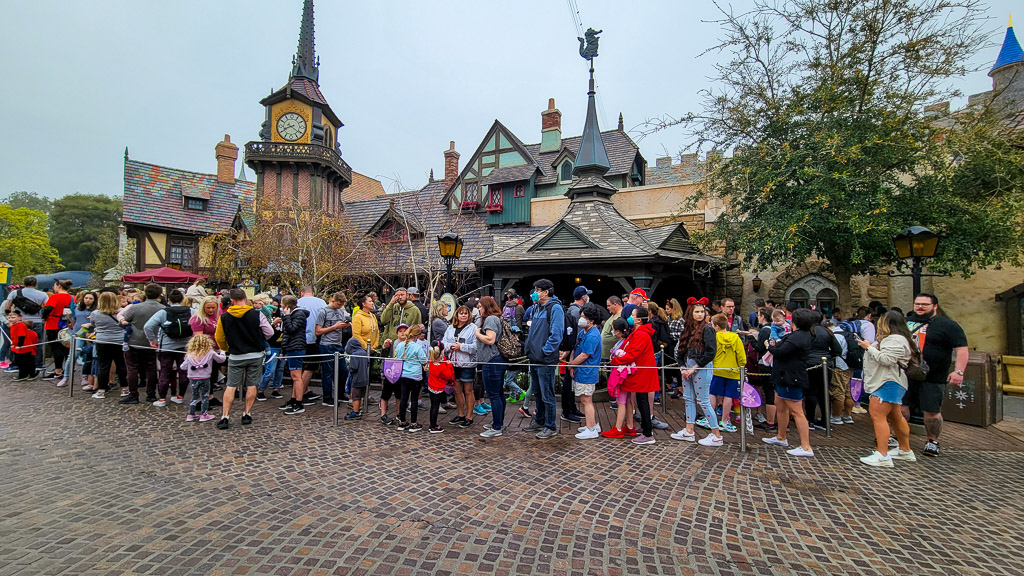
So instead of spending that valuable early time waiting for Peter Pan, I would rather use the first hour or two to get through several other Fantasyland rides while their waits are still low, then make Peter Pan one of my last rides in the area.
That way, you might wait roughly the same amount of time for Peter Pan either way, but you have accomplished a lot more before the rest of Fantasyland gets busy.
Indiana Jones Adventure
Indiana Jones Adventure is a little different.I am comfortable building an Adventureland morning around Indiana Jones, but I would go in knowing that it may not be ready right at park opening. If that happens, pivot to something nearby like Jungle Cruise or Pirates of the Caribbean and come back to Indiana Jones once it is operating.

Disney California Adventure Park
At California Adventure, I would not suggest starting with Monsters, Inc. Mike and Sulley to the Rescue! or Radiator Springs Racers.
Radiator Springs Racers
Radiator Springs Racers looks like an obvious rope drop choice because it regularly has one of the longest waits in Disney California Adventure. But I usually do not recommend building your morning around it.
A lot of guests head straight to Cars Land at park opening, and Radiator Springs Racers is also prone to delayed openings. If it is not running right away, you are suddenly in the same area as a large crowd of people who are now filling the other Cars Land attractions while they wait for Racers to come back up.
Instead, I would rather head toward Pixar Pier and use that early time to knock out Incredicoaster and Toy Story Midway Mania, two high-demand attractions that can both build longer waits later in the day.
That gives you a much better chance of getting multiple major attractions done in the first part of the morning instead of gambling that Radiator Springs Racers will be ready right at opening.
Monsters, Inc. Mike & Sulley to the Rescue!
Monsters, Inc. is another attraction I usually would not make the focus of a rope drop strategy because it is fairly isolated from the other rides in Disney California Adventure.
If you head there first, you are using valuable morning time to get to one attraction without many nearby rides to immediately build into the rest of your plan.
Another big factor is Buddy Pass, which is often available and can help reduce the wait later in the day.
The main exception is if part of your group is rope dropping Guardians of the Galaxy: Mission Breakout! and someone in your party is not riding. In that situation, Monsters, Inc. can make sense because it gives the non-riders something nearby to do while the rest of the group is on Guardians.
What about Soarin’?
Soarin’ checks one of the boxes that would normally make me hesitate to rope drop it: it is not especially close to a group of other attractions. But I still think it can be a perfectly good rope drop choice.
The biggest reason is its location right off Buena Vista Street. You are not committing to a long walk deep into the park, and guests are often allowed to begin lining up during the pre-rope-drop mix-in. Sometimes Soarin’ even begins loading before the park’s official opening time.
Because of that, rope dropping Soarin’ does not always use up the same valuable post-opening minutes that another isolated attraction might.
So while I would not usually recommend heading to one stand-alone attraction first thing, Soarin’ is an exception I am comfortable with.
How Lightning Lane Changes Your Rope Drop Strategy
How Lightning Lane affects your rope drop strategy will look different from group to group.
For some families, rope drop is a way to focus on attractions that do not offer Lightning Lane. For others, it is a way to ride a favorite attraction early and save the Lightning Lane for later so they can experience it twice.
Toy Story Midway Mania is a good example. If your group really loves that ride, you may be able to walk on or have a very short wait first thing in the morning, then use Lightning Lane later in the day when the standby wait is much longer.
I also still recommend booking your first Lightning Lane as soon as you scan into the park. That starts your two-hour clock and gives you more flexibility later.
I usually try to make my first Lightning Lane return time for after the first two hours in the park. That gives me time to take advantage of lower standby waits, grab something to eat, and use the restroom before switching into Lightning Lane mode. If the return time is too early, I book it and keep modifying it later.
You also do not have to use a Lightning Lane just because you have one booked.
If you get to Toy Story Midway Mania and the standby wait is only 15 minutes, I would rather wait in standby and modify the Lightning Lane for later than use it on a ride with a short wait. The same goes for attractions like The Little Mermaid. If the posted wait is five minutes, that often means it is basically walk-on, and using Lightning Lane there is not helping you very much.

Rope drop can also work really well when you focus on one area in the morning while booking Lightning Lanes for a completely different area later. I often rope drop Pixar Pier and Paradise Gardens Park while booking Lightning Lanes for Avengers Campus for later in the day.
If you are not buying Lightning Lane Multi Pass, rope drop becomes even more important. I highly recommend arriving early because those first couple of hours give you your best chance to get through several attractions before standby waits build.
Without Lightning Lane, rides like Indiana Jones Adventure, Guardians of the Galaxy: Mission Breakout!, and Incredicoaster may move much higher on your priority list because their waits can get long and often stay long.
If you do have Lightning Lane, I usually do not spend rope drop time on rides like Space Mountain, Matterhorn Bobsleds, WEB SLINGERS, or Guardians of the Galaxy unless there is a specific reason to. I would rather use rope drop where it gives me an advantage and save those attractions for Lightning Lane later.
Indiana Jones is a little different. Because it can have downtime, if it is a true must-do for your trip, I may still build it into my rope drop plan even if I also have Lightning Lane available.
For families with younger kids, I often recommend using your first morning to focus on Fantasyland. Kids tend to have the most energy and excitement early in the trip, and Fantasyland lets you get through several rides they are likely to enjoy while also giving them a chance to warm up before trying more thrilling attractions later.
For a deeper look at how booking, modifying, and timing your selections works, read my Disneyland Lightning Lane guide.
How Park Hopping Changes Your Rope Drop Strategy
Now that Disneyland no longer has a set time restriction for park hopping, you have more flexibility in how you plan your morning. Since this change is still fairly new, I would not make any big assumptions yet about how it will affect crowd patterns throughout the day.
For now, I look at park hopping as another tool that can work with rope drop and Lightning Lane.
One strategy I use is rope dropping one park while booking Lightning Lanes for later in the other park. This can work especially well if I start my day at Disneyland and plan to spend the second part of the day at Disney California Adventure, since many of the rides I am interested in at DCA offer Lightning Lane.
That does not mean I recommend hopping back and forth constantly.
Disneyland and DCA are only a couple of minutes apart at the entrance gates, but the attractions themselves are much farther inside each park. Park hopping still takes time, so I prefer to finish the goals I have in one park before moving to the other.
For me, that usually means thinking in larger blocks of time, such as spending the morning through lunch in one park and then moving to the other park for the rest of the day.
If you are booking Lightning Lanes in the other park while you rope drop, give yourself a buffer. Do not book your first return time so tightly that you are rushing through your morning just to make it across the esplanade before it expires. If your morning takes longer than expected, modify the Lightning Lane.
There are also some days when park hopping patterns may look different. During food festivals at Disney California Adventure, for example, you may see more guests moving from Disneyland to DCA between about 10 a.m. and noon so they can get to the festival booths early.
The biggest thing to remember is that just because you can hop at any time does not mean you need to. Rope drop works best when you give yourself enough time to actually take advantage of the lower waits in the park where you started.

How After Dark Events Can Change Your Rope Drop Plans
If there is an after-dark event scheduled in one of the parks, that can actually make the event park a strong rope drop choice.
Many guests with one-park-per-day tickets avoid the park hosting the event because it will close earlier. That can make the event park noticeably lighter during the morning and early part of the day, which means you may be able to accomplish more during rope drop.
I see this effect most with Oogie Boogie Bash, Star Wars Nites, and Pride Nites, when the event causes a park to close significantly earlier than it normally would. Events held during January through March do not always change the regular park hours as dramatically, so the impact on morning crowds may be smaller.
If I only have a one-park ticket, I am still comfortable choosing the event park and simply planning to leave when the park closes for the event. I would rather take advantage of a quieter morning than automatically choose the other park just because it stays open later.
If you have a Park Hopper, you can use the same strategy and start in the event park, then move to the other park later in the day.
The main thing to remember is that event guests are usually allowed into the park several hours before the event officially begins, so crowds can start growing later in the afternoon. That does not change the rope drop advantage, but it is one more reason to make good use of those early hours.
Want to see how we plan a Disneyland day when an After Dark event is happening? Watch our video here.
Common Rope Drop Mistakes
Rope drop can be one of the best ways to get a lot done early, but only if you go in with a plan.
One of the biggest mistakes is showing up without knowing where you are going first. This is something I decide before I ever get to the park. Even as someone who visits Disneyland often, if I do not have a clear “this is where we are headed first” plan, my rope drop morning can be a lot less productive.
That does not mean every rope drop has to be about accomplishing as many rides as possible. If your plan is to grab a drink, enjoy the atmosphere, and people-watch, that is completely fine. But if you are trying to take advantage of those lower morning waits, you need to know what area you are starting in and what your priorities are there.
Another mistake is choosing a ride simply because it has one of the longest waits later in the day. A high wait time does not automatically make something a good rope drop choice. Location, reliability, nearby backup attractions, and how the ride fits into the rest of your morning all matter.

I also see people zig-zagging across the park trying to knock out individual priorities. That usually wastes some of the best low-wait time of the day. I would rather choose an area where several of our priorities fit together and work through that part of the park before moving on.
If your first attraction has a delayed opening, do not stand around waiting for it. Pivot to another nearby attraction and keep moving. This is exactly why I like rope drop plans that give you multiple good options in the same area.
If you are using Lightning Lane, another mistake is using it just because you have it booked. If the standby wait is still very short, use standby and modify your Lightning Lane for later. You will get much more value from it once crowds and waits build.
And finally, do not assume your morning is ruined because you are not standing at the rope the second it drops. Arriving a few minutes late is not the same as missing rope drop completely. You can still get a lot done during those first one or two hours if you know where you are going and keep moving.
How Long Does the Rope Drop Advantage Last?
There is no set time when the rope drop advantage ends. It can vary a lot based on the time of year, crowd levels, and what is happening in the parks that day. On some of the least busy days, the whole day can almost feel like rope drop.
For me, one of the biggest signs that rope drop is winding down is standby wait time. I know what my personal maximum wait tolerance is for most rides, so once those attractions start reaching that point, I know it is time to stop treating the morning like rope drop and shift into the next part of the day.
Another sign is simply whether I have accomplished my main goals. Sometimes the rides I really wanted to get done are finished within the first few hours. Once that happens, I can slow down and stop feeling like I need to keep chasing low wait times.
And honestly, sometimes the answer is just: I am hungry.
I usually expect that around 90 minutes to two hours after park opening, but if I get hungry earlier, I am not going to force myself to keep pushing through rides just because wait times are still low.
What I do next depends on the rest of my park plans. I may grab something to eat and then hop into a few lines that still look reasonable. I may shop. I may take a break. During especially hot weather, I may even head back to the hotel for a while.
If I have Lightning Lane, this is also when my strategy starts to shift more toward later in the day. I will focus on setting up Lightning Lanes for the evening so I can spend the hottest and most crowded part of the day doing things like shows, shopping, dining, or taking a hotel break, then come back with several Lightning Lane options ready to go.
I use the same basic approach at both Disneyland and Disney California Adventure. There is no exact clock time when rope drop is “over.” I look at the waits, my goals, how I am feeling, and what the rest of the day looks like.
Want My 5 Go-To Rope Drop Strategies?
You now know how I decide what to rope drop, how Lightning Lane and park hopping can change the plan, which rides I usually avoid first thing, and how I know when the rope drop advantage is over.
But sometimes you do not want to build the strategy from scratch. Maybe you are screaming at your screen, “Becca, just tell me what to do, in what order!“
That is why I created my 5 Go-To Disneyland Rope Drop Strategies, plus 3 bonus strategies I’ve personally tested. These are the morning plans I use most often for Disneyland and Disney California Adventure, depending on your priorities and who you are traveling with.
Inside, you’ll get ready-to-use strategies that show you:
- where to start in each area
- what rides to do first
- how to move through nearby attractions without wasting time
- where breakfast and bathroom breaks can fit into your morning
- when Lightning Lane may help, and when standby makes more sense
Rope drop can give you a great start to your Disneyland day, but you don’t need to plan every minute of your morning for it to work. Pick the attractions that matter most to your group, have a general idea of where you’re heading first, and be ready to adjust if a ride is down or the morning doesn’t go exactly as planned.
A good rope drop isn’t about doing Disneyland perfectly. It’s about getting a few priorities done early so you have more flexibility for the rest of your day.